
TOYROBOT VIDEO REVIEW #007 - MANHUNT (1975) - Released 19th October 2026
Tokyo Takeovers, Bear Attacks, Horse Stampedes & One Hell of a Wrong-Man Thriller
There are few things I enjoy more than discovering a cracking new-to-me film, particularly when it comes from a corner of world cinema I already have a serious soft spot for. And when it comes to 1970s Japanese crime cinema, I’m very much a happy customer.
My collection has been growing steadily as labels continue digging into the archives and giving these films the shiny restorations they deserve. Every time another title gets announced, I start eyeing up the shelves and wondering where the hell I’m going to squeeze it in. It’s a terrible affliction, really. There are worse habits, mind you, and at least this one comes with excellent cinematography and the occasional car chase.
So, when it came to Manhunt (1976), I was already primed to give it a go. What I wasn’t expecting was to have quite this much fun with it.
Directed by Junya Satō and starring the legendary Ken Takakura alongside Yoshio Harada, Manhunt is a Japanese crime thriller that takes the simple concept of a man being wrongly accused of a crime and proceeds to throw absolutely everything at him. And I do mean everything.
This is a film that starts running and seems determined to keep going until somebody physically removes the batteries.
WRONG MAN, RIGHT MOVIE
The premise is straightforward enough. Fuyuto Morioka (Ken Takakura), a respected chief prosecutor, finds himself accused of crimes he didn't commit. Rather than politely waiting for the justice system to sort itself out, he escapes custody and goes on the run, determined to discover who's framing him and why.
Hot on his heels is Detective Yamura, played by Yoshio Harada, whose pursuit of Morioka gives the film a wonderfully prickly cat-and-mouse dynamic. Meanwhile, our fugitive protagonist finds himself caught up in an increasingly elaborate conspiracy involving corporate corruption, government shenanigans and a pharmaceutical company developing a rather dodgy mind-control drug, because apparently being framed for a crime isn't enough. Sometimes you need a massive conspiracy and a suspicious pharmaceutical corporation thrown into the mix for good measure.
What really surprised me was just how quickly the film gets going. There's very little hanging around waiting for the plot to warm up, and once Morioka is on the run, the film rattles through one outrageous set piece after another.
We're talking foot chases through Tokyo, a bloody bear attack, an escape involving a stolen aeroplane and a horse stampede through a crowded city. That's not a list of things I expect to see in a single film, let alone one after another, but Manhunt seems to have taken the position that if a scene can be made more ridiculous, exciting or downright bonkers, then why the hell not?
It's a glorious approach to filmmaking.
The early stretch has the sort of breathless momentum that makes it incredibly easy to forgive a plot that occasionally seems to be making things up as it goes along. There's a terrific Hitchcockian quality to the central wrong-man scenario, with Morioka constantly having to improvise, evade capture and try to stay one step ahead of people who would very much like to see him locked away.
And the film doesn't simply rely on one big action sequence to get you invested. It keeps finding new ways to put its protagonist in trouble, often in situations that would have most of us throwing in the towel and asking whether prison might actually be the more relaxing option.
Not Morioka, though. He's got places to be, conspiracies to uncover and, apparently, some very pressing business with a horse.
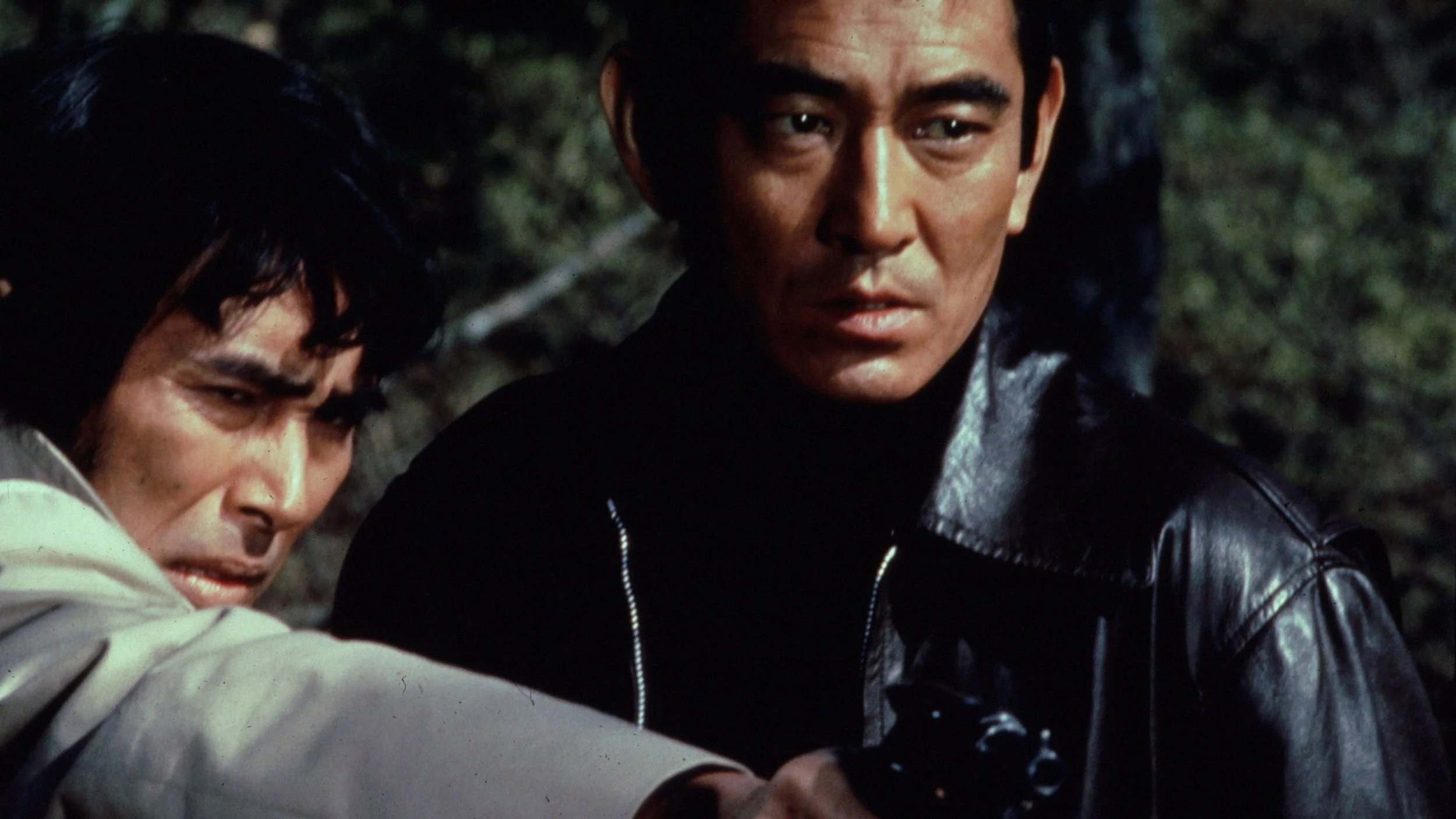
TAKAKURA AND HARADA: TWO ABSOLUTE GRAFTERS
One of the reasons this increasingly absurd adventure works so well is the cast.
Ken Takakura is superb as Morioka. He brings a cool, understated authority to the role, making the character feel like a genuinely capable man who has suddenly found himself in a situation spiralling well beyond his control. He doesn't need to shout, flail about or constantly remind us how dangerous he is. There's a quiet intensity to his performance that does most of the heavy lifting.
Even when the film throws another ludicrous obstacle in his path, Takakura plays it straight. He's the sort of leading man you can believe might escape from a police chase, survive an encounter with wildlife and then find himself commandeering an aircraft before lunch.
It's a performance that gives the film a solid centre, which becomes increasingly important as the plot starts wandering into more elaborate territory.
Then there's Yoshio Harada as Detective Yamura, who brings a different kind of energy to the proceedings. He's a terrific counterpoint to Takakura: rougher around the edges, unpredictable and carrying that wonderful 1970s tough-guy charisma that makes you want to see more of him every time he appears.
Their dynamic is one of the film's great strengths. Even as the story grows more complicated, the performances keep things grounded. These are characters who feel like they belong in this world, rather than actors desperately trying to convince us that the next increasingly improbable development makes any sense whatsoever.
The supporting cast adds further weight to the film, too, helping create the impression of a sprawling conspiracy that reaches well beyond one unfortunate bloke having a spectacularly bad week.
The whole thing has that big, star-studded Japanese blockbuster feel, with the cast giving the material enough conviction to carry it through the more ridiculous twists and turns….And honestly, I wouldn't have it any other way.
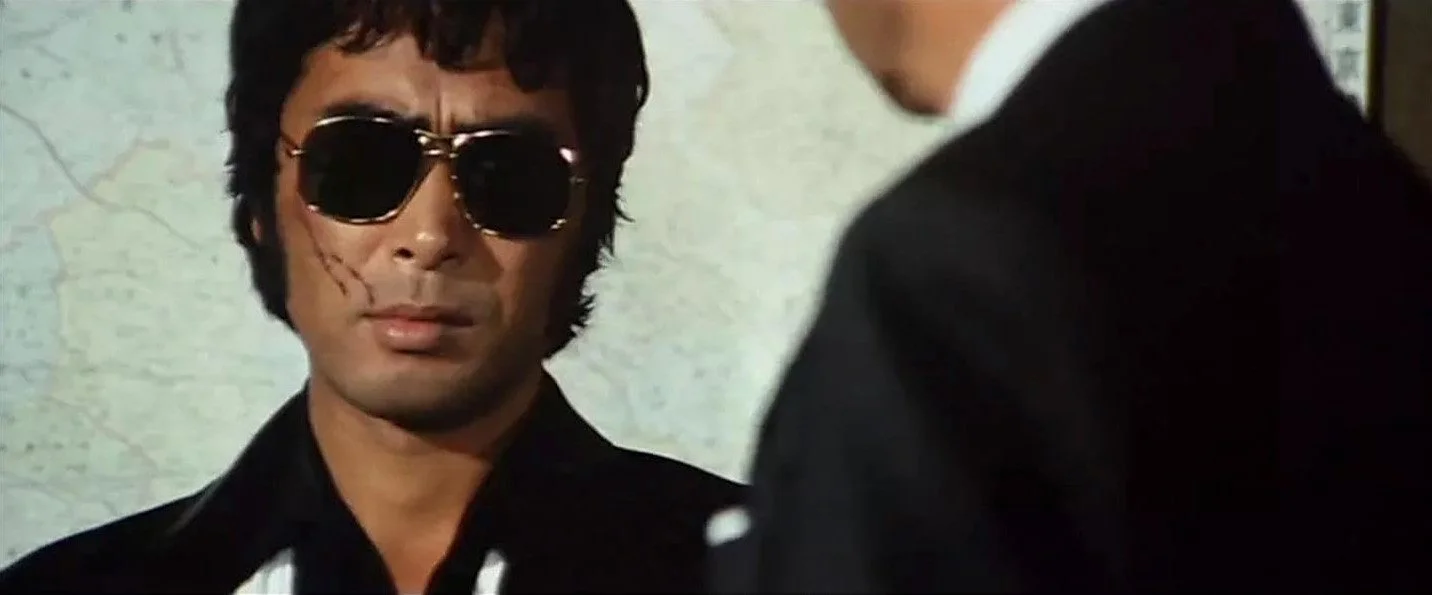
ALL GAS, NO BRAKES… UNTIL THERE ARE BRAKES
For roughly the first 90 minutes, Manhunt is an absolute home run for me, the acting is terrific, the action keeps coming, the story has enough mystery to maintain your interest, and the pacing makes the film feel like it's constantly pushing towards the next big moment. There's a wonderful sense of forward momentum, and the sheer variety of the set pieces keeps things fresh.
It's also a film with a terrific sense of scale. This isn't simply a handful of people running around a studio backlot while somebody shouts instructions from behind the camera. The journey across Japan gives the film a real sense of movement, with the locations and action helping sell the scale of Morioka's predicament.
And then there's the music.
Hachiro Aoyama's score is a huge part of what makes the film work for me. It gives the action a real sense of urgency and drama, helping turn the already lively proceedings into something that feels properly cinematic. It's another of those elements that makes you appreciate how much personality these films can have when the various pieces fall into place.
However, I would be doing you a disservice if I pretended the whole 151-minute runtime was firing on every cylinder and eventually, Manhunt starts to lose some of that early momentum. As the story moves deeper into the corporate and medical conspiracy, the plot becomes increasingly convoluted, with the mind-control drug business taking centre stage.
Now, I'm perfectly happy to go along with a ridiculous conspiracy thriller. Give me shadowy organisations, corrupt officials and a pharmaceutical company with more secrets than a dodgy politician's filing cabinet, and I'll probably settle in quite happily. But there's a point where the story starts explaining itself a little too much, and the film begins to feel its considerable running time. The final stretch doesn't have quite the same breathless energy as the earlier chase sequences, and some of the twists are more elaborate than they are satisfying.
It's not that the conspiracy is inherently a bad idea. Far from it. It gives the story a bigger target and raises the stakes beyond Morioka simply trying to clear his name. It's more that the film's strongest asset is its sheer forward momentum, and the more time it spends untangling the plot, the less of that wonderfully frantic energy remains.
I found myself wishing the final act had kept things a little tighter. Trim some of the exposition, keep the pressure on and let the action do more of the talking.
Still, this is a criticism of a film that had already given me a bloody good time. The later sections might not reach the same heights as the first half, but they don't erase the pleasure of everything that came before.
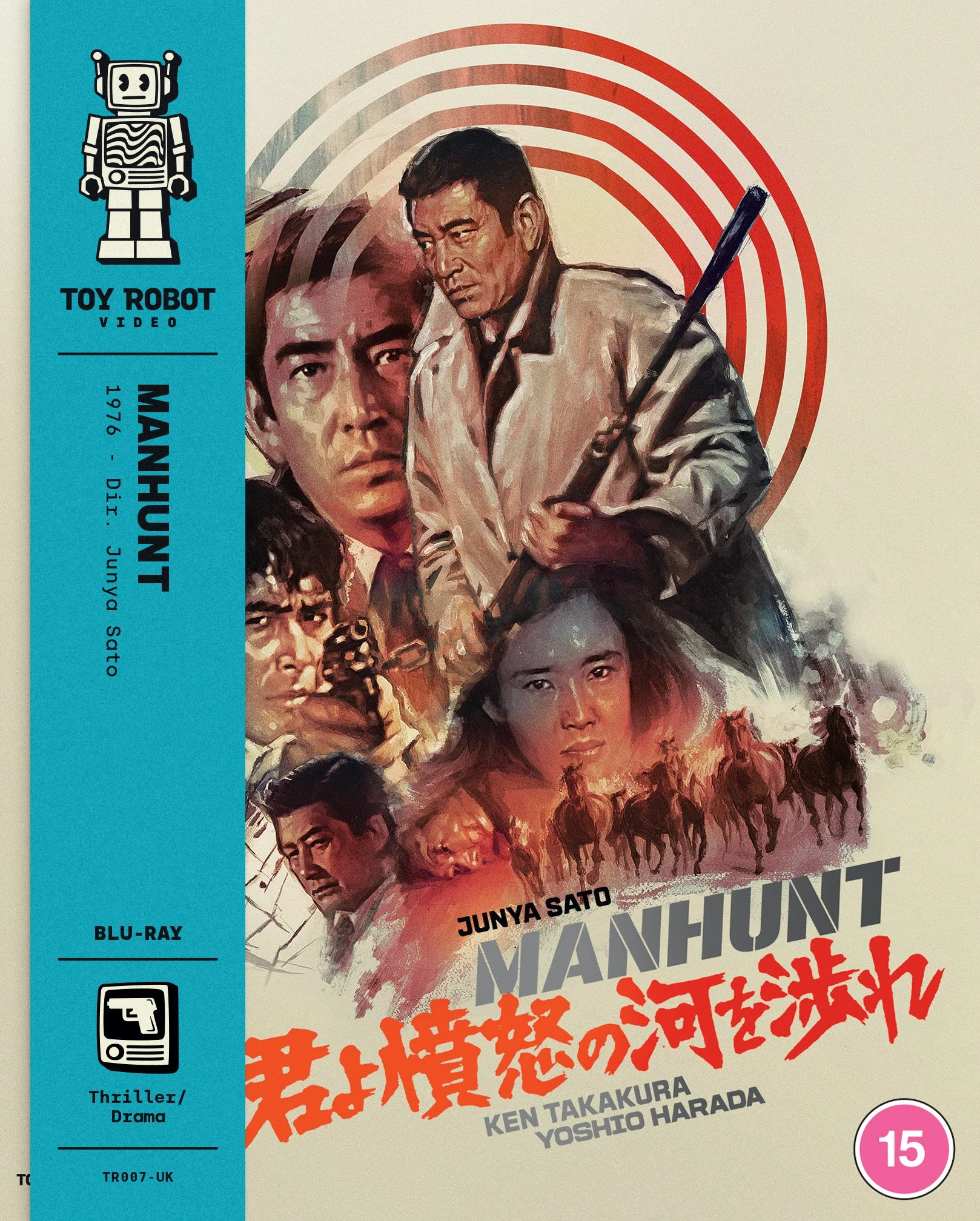
A FILM THAT TRAVELLED A LONG WAY
There's another reason Manhunt is worth talking about beyond its action sequences and its place in 1970s Japanese cinema.
Although it wasn't a major box-office success in its home market, the film became a phenomenal hit in China following the Cultural Revolution. It was among the first foreign films screened there after that period, and its popularity helped turn Ken Takakura into an enormously influential screen presence for Chinese audiences. The film's success was so extraordinary that it became a genuine cultural event, rather than simply another imported thriller.
That's a fascinating legacy for a film whose plot involves a man running away from the police, a pharmaceutical conspiracy and enough spectacular nonsense to keep several action movies going.
It also helps explain why the film has continued to attract interest internationally, including from filmmakers who grew up with its reputation.
John Woo returned to the story with his own Manhunt in 2017. I haven't seen that version yet, so I can't offer a personal comparison, and I won't pretend otherwise. The critical reception was mixed, however, and research comparing the two adaptations suggests that Woo's version failed to recapture the original's cultural impact in China. However, it's certainly one I'll be keeping an eye out for, if only to see how Woo approaches the material and whether his trademark action style suits the story. but the original has already done enough to win me over.
And that's really what I want from these releases. I love seeing labels give older Japanese crime and action films another chance to find an audience, particularly when a restoration makes it easier to appreciate the craft that went into them. There's an enormous amount of genre cinema out there that deserves to be rediscovered, and every successful release feels like another little victory for those of us who enjoy rummaging around in cinema's less-travelled corners.
If ToyRobot has more Japanese crime cinema of this vintage up its sleeve, then I sincerely hope Manhunt isn't a one-off. I'd happily take more of this sort of thing, thank you very much.
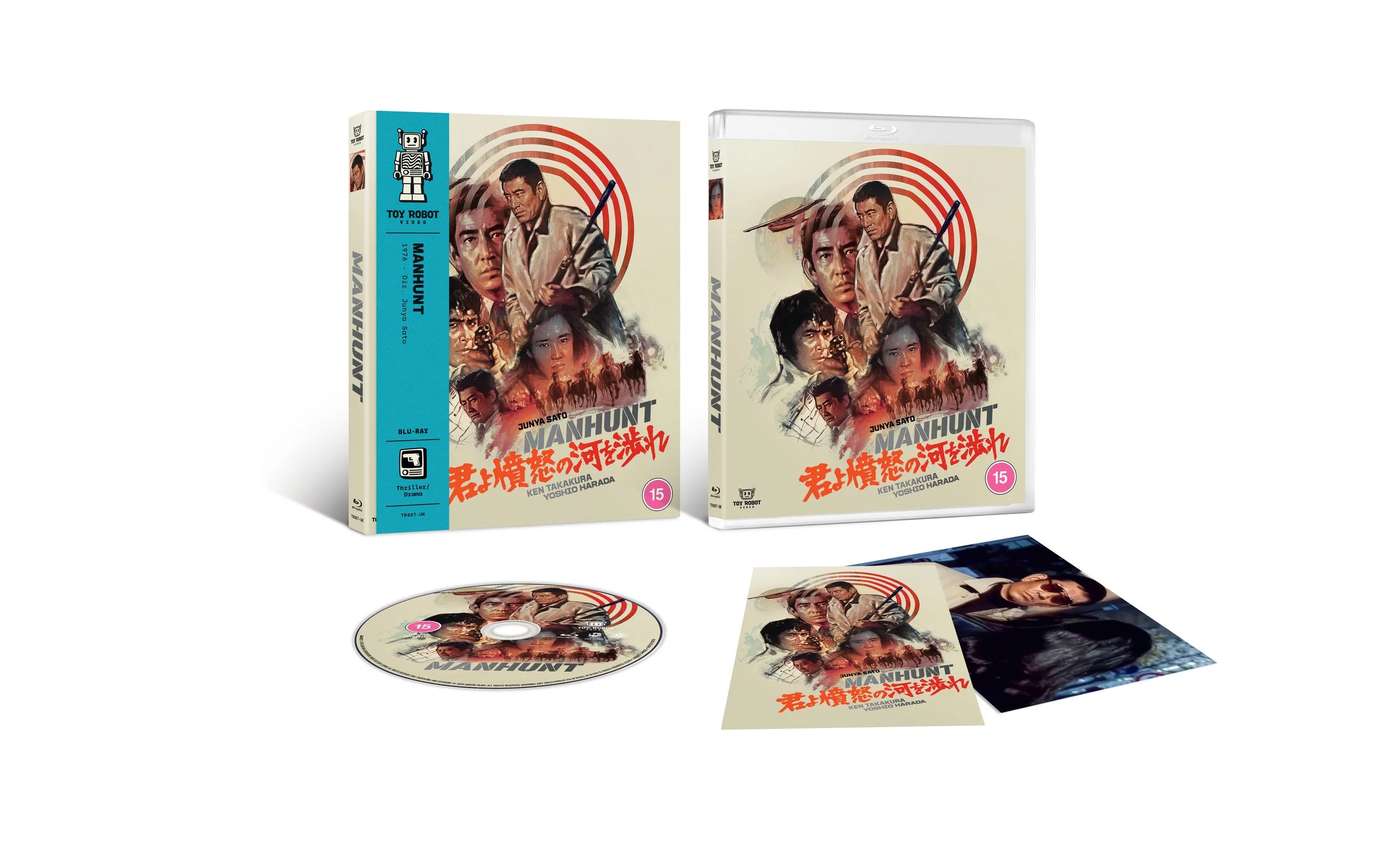
ToyRobot Video EXTRA’S
ToyRobot's release comes with a collection of new extras that, on paper, looks well suited to a film with such an interesting history and a director and cast worth exploring.
The features include:
Audio Commentary with Jasper Sharp and Amber T. – a commentary offering a chance to dig deeper into the film and its place in Japanese cinema.
Man on the Run – a new introduction with Japanese film specialist Mark Schilling.
An Unusual Director – a discussion of the film and its production with Junya Satō biographers Masaaki Nomura and Tatsuya Masuto.
Scaling the (Great) Wall to Freedom – a text essay by James Marsh.
Believing in Ken Takakura – a text essay by Earl Jackson.
Stills Gallery.
Original Theatrical Trailer.
The commentary and the director-focused discussion sound particularly appealing, while the Mark Schilling introduction should offer useful context for anyone interested in the film's remarkable international journey. The essays on the film's reception and Takakura's screen legacy also seem like worthwhile additions to a release that has more to discuss than just its action sequences.
It's a above expected selection of extras, and I appreciate the effort to put the film into a wider historical and cinematic context rather than simply sticking a trailer on the disc and calling it a day.
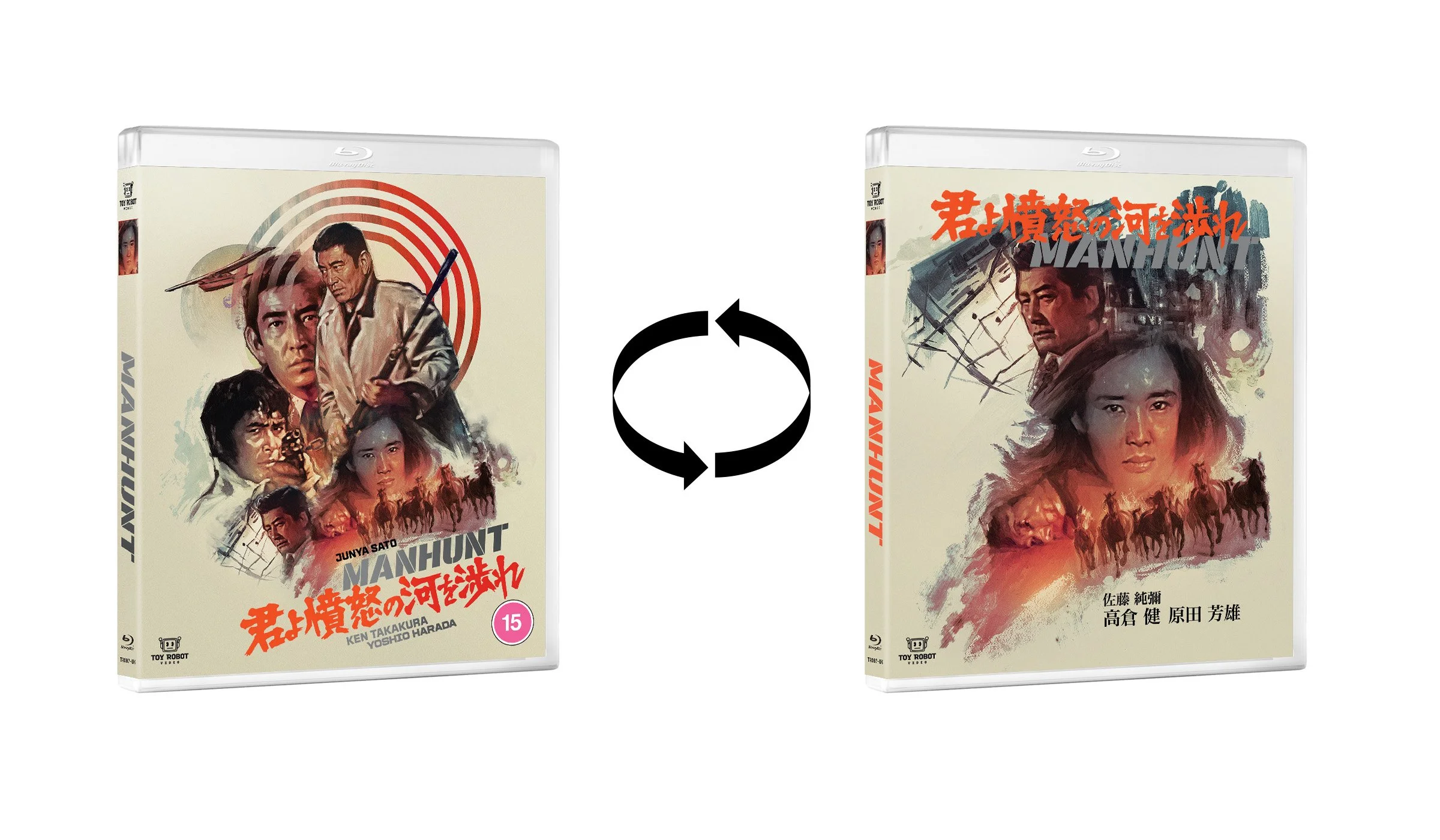
However, there's an important caveat here: I didn't receive a productised copy of Manhunt, or any of ToyRobot's October releases. That means I haven't been able to assess the physical packaging and printed materials.
Hopefully, the physical copy will eventually make its way to me, and I can revisit the package properly. For now, the extras look promising, but I'll leave the final word on their quality until I've had the opportunity to experience them myself.
THE TOYROBOT SCORE
Manhunt – The Movie: ★★★★ / 5
Special Features: ★★★½ / 5
Overall Release Score: ★★★★ / 5
Manhunt was a first-time watch for me, and it's exactly the kind of discovery that reminds me why I love exploring 1970s Japanese crime cinema.
The performances are excellent, the action sequences are gloriously over-the-top, the score gives the whole thing a terrific sense of scale, and the early pacing makes it an absolute blast. Ken Takakura and Yoshio Harada are a superb pairing, anchoring a story that seems determined to throw every conceivable obstacle in its protagonist's path.
Yes, the 151-minute runtime is a bit of a beast. The final act loses some of the urgency that makes the opening stretch so effective, and the pharmaceutical conspiracy occasionally gets tangled up in its own plot mechanics. But even with those reservations, I came away having had a fantastic time.
This is a film that understands the simple pleasure of watching a capable leading man get caught in an impossible situation and then fight his way out of it, one increasingly ridiculous set piece at a time.
The combined score remains provisional because I haven't been able to assess the physical release, but based on the film itself, this is a very easy recommendation from me.
I'm genuinely hoping ToyRobot continues to explore this sort of Japanese genre cinema. My collection is already growing at a rate that will soon require either a bigger house or some creative shelving solutions, and releases like this are precisely why.
Manhunt may take a little detour in its final act, but the journey there is an absolute blast. More 1970s Japanese crime cinema, please. I'll make room.
RELEASE INFORMATION
Title: Manhunt (1976)
Catalogue Number: TR007-UK
Barcode: 5027035030852
Release Date: 19 October 2026
Format: Blu-ray
Discs: 1
Country: Japan
Genre: Action / Crime
Director: Junya Satō
Cast: Ken Takakura, Yoshio Harada, Ryō Ikebe
BBFC Rating: 15
Aspect Ratio: 2.35:1
Audio: DTS-HD 2.0 Mono
Language: Japanese
Subtitles: English
Runtime: 151 minutes
RRP: £21.99
Special Features:
NEW Audio commentary by Jasper Sharp and Amber T.
NEW Man on the Run – Japanese film specialist Mark Schilling on Manhunt.
NEW An Unusual Director – a discussion of the film and its production by Junya Satō biographers Masaaki Nomura and Tatsuya Masuto.
NEW Scaling the (Great) Wall to Freedom – a text essay by James Marsh.
NEW Believing in Ken Takakura – a text essay by Earl Jackson.
Stills gallery.
Original theatrical trailer.
Release information source: ToyRobot Video / Fetch Publicity.