
FLIC STORY (1975) - 4K UHD Release 5 October 2026
THE INTRODUCTION
My first encounter with Flic Story also happens to be an introduction to one of the more fascinating corners of French crime cinema.
French crime films have produced some genuine classics, from the poetic fatalism of pre-war cinema and the shadowy world of film noir through to the cool, existential gangster films of J.P Melville and those hard-edged police thrillers that followed. But for every acknowledged classic, there are plenty of films that have remained considerably less visible outside France and the wider European genre-film community.
And that makes discovering something like Flic Story particularly rewarding.
Released in 1975 and directed by Jacques Deray, the film stars Alain Delon as police investigator Roger Borniche and Jean-Louis Trintignant as notorious criminal Émile Buisson. Based on Borniche's own bestselling account of his nine-year pursuit of Buisson, the film immediately establishes an intriguing dynamic… this isn't simply a fictional cop chasing a fictional criminal, but a dramatisation of an actual investigation between two men whose professional lives became increasingly intertwined.
And what an introduction it is.
Rather than presenting its police protagonist as an unstoppable action hero, Flic Story is far more interested in patience, observation and persistence. The investigation involves surveillance, interrogation, dead ends, informants and painstaking detective work. Catching a dangerous criminal isn't about one spectacular breakthrough (as modern crime thrillers would have you believe), rather it's about gradually tightening the net. And that approach immediately places the film within one of the most interesting traditions of French crime cinema.
There are certainly highs and lows within the genre, speaking as someone who has ‘dabbled’ with this time period and country of origin’s cinema. At its best, French crime cinema combines atmosphere, character, realism and moral ambiguity, creating films that feel grounded in the social world around them. At its weakest, the procedural elements can become overly dry or emotionally distant, with style occasionally taking precedence over substance. Thankfully, Flic Story finds a compelling balance between the two.
There is plenty of star power, violence and tension, but the film remains rooted in the mechanics of the investigation. Paris becomes a living part of the story, while Delon and Trintignant create a fascinating cat-and-mouse relationship between law enforcement and the criminal underworld.
Coming to the film for the first time, what becomes immediately apparent is just how confidently Deray handles that balance.
StudioCanal's new 4K restoration provides the perfect opportunity to discover Flic Story as both a gripping crime thriller in its own right and an intriguing gateway into the wider history of French crime cinema.
WHY THIS FILM STILL MATTERS
French crime cinema has a long and fascinating history, stretching from the poetic fatalism of pre-war films and the shadowy underworld dramas of the 1930s and 1940s through to cool existential gangster films. The genre has often existed in conversation with American film noir, but it has rarely felt like a simple imitation.
French filmmakers have frequently placed greater emphasis on routine, environment and social detail. Criminals are professionals rather than cartoon villains, while police officers are rarely presented as uncomplicated heroes. Both sides understand systems, habits and weaknesses. The difference is often simply which side of the law they happen to occupy.
Flic Story embraces that tradition while remaining remarkably accessible.
Its central narrative is straightforward with Roger Borniche spending years pursuing Émile Buisson, a ruthless killer whose escape from an asylum leads to a murderous rampage. But the film finds its tension not through endless twists, but through the gradual tightening of the net.
The pursuit feels exhausting because it is supposed to feel exhausting.
There are leads that go nowhere, false starts, surveillance, legwork and the constant frustration of dealing with a criminal who knows how to disappear. The film understands that catching a dangerous man is rarely about one brilliant moment of deduction. More often, it is about persistence, instinct and refusing to let the trail go cold. This gives Flic Story a grounded quality that makes it a fascinating companion piece to the more flamboyant crime films of the period.
It is not trying to turn the police into superheroes, nor is it particularly interested in making Buisson a romantic antihero as he would had this been an Italian Poliziotteschi. Instead, it presents crime as a brutal professional ecosystem, where intelligence and patience can be just as important as violence.
In that respect, Flic Story belongs to the same broad cinematic conversation as the police procedurals, gangster films and underworld dramas that helped establish French crime cinema as a genre with its own identity.
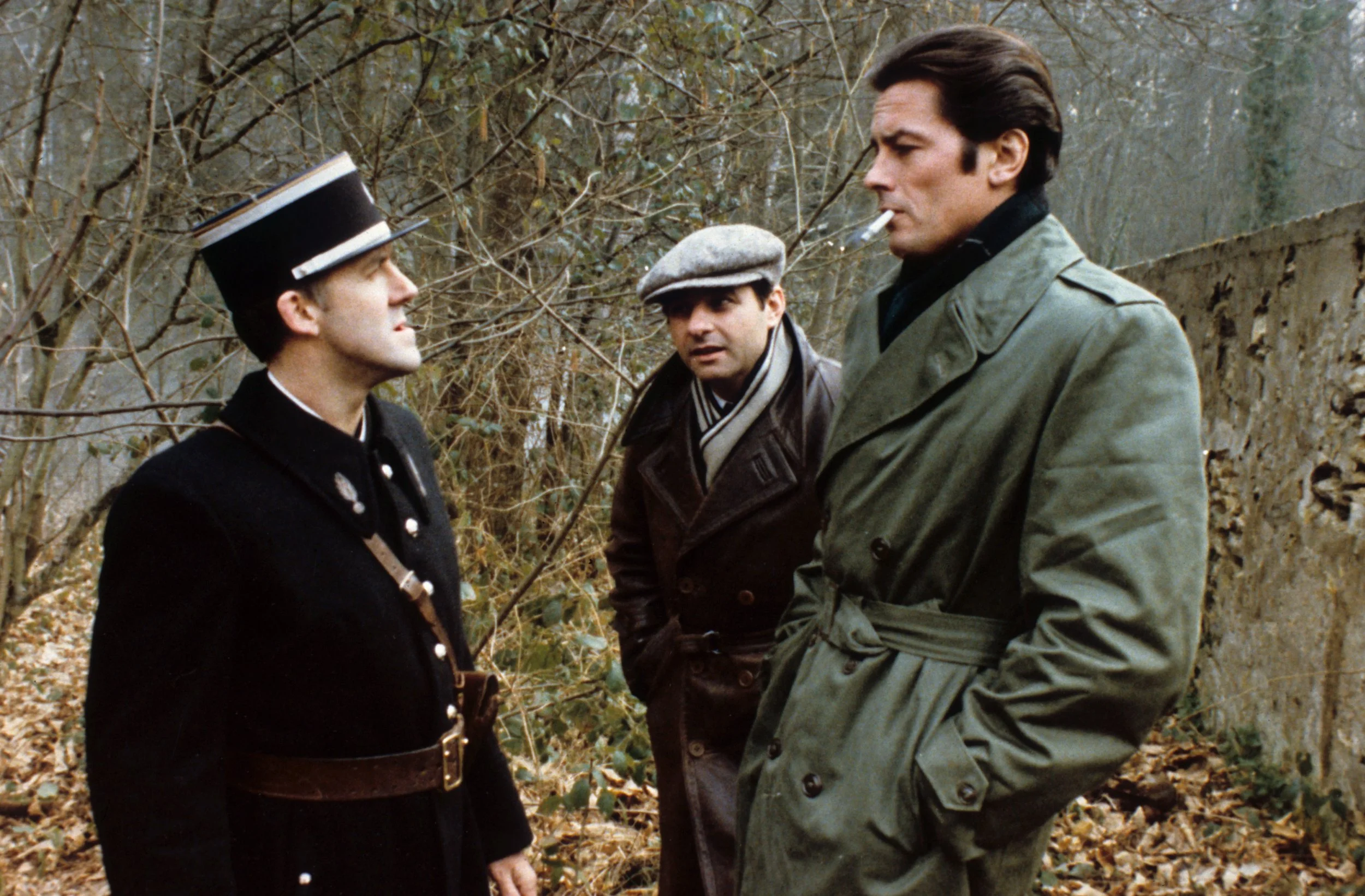
THE DIRECTOR, THE CAST & THE CRAFT
Jacques Deray was one of the key figures in French crime cinema, a director whose filmography demonstrates a particular talent for combining commercial accessibility with hard-edged genre craftsmanship.
Although he worked across a variety of subjects, Deray became especially associated with crime thrillers and police dramas. His films understood the appeal of stars, tension and stylish presentation, but they also had a strong interest in the mechanics of criminal behaviour and police investigation and that balance is integral to Flic Story.
Deray keeps the film moving without making the investigation feel rushed. The story has momentum, but it also allows the procedural details to breathe. Paris becomes more than a backdrop, it’s a lived-in environment of streets, apartments, offices and shadowy meeting places all contributing to the sense that this pursuit is unfolding within a real and recognisable world.
Alain Delon is perfectly cast as Roger Borniche. His screen persona could easily have made Borniche into another impossibly cool, effortlessly competent crime-film icon. Instead, there is a pleasing weariness to the performance. This is a man who has spent years chasing the same quarry, and Delon communicates the stubbornness, concentration and quiet frustration of someone who knows that the job is as much about endurance as heroism.
Borniche is not a loud or showy investigator. His authority comes from observation and persistence, with Delon using his familiar charisma in a more restrained and workmanlike fashion.
Opposite him, Jean-Louis Trintignant is superb as Émile Buisson.
Trintignant brings a chilling intelligence to the role. Buisson is not simply a snarling brute, but a calculating and deeply dangerous man whose unpredictability makes him such an effective opponent. There is an unsettling calmness to the performance, as if violence is simply another tool in his professional kit.
The chemistry between Delon and Trintignant is crucial.
Their characters are separated by the law, but connected by a mutual understanding. Each recognises that the other is capable, committed and unwilling to surrender. It creates a compelling duel between patience and brutality, discipline and chaos.
The supporting cast is equally strong with Renato Salvatori, Maurice Barrier, André Pousse, Marco Perrin and Claudine Auger adding texture to the film's criminal and institutional worlds.
The film's visual approach is deliberately grounded. Rather than chasing elaborate flourishes, Deray and his collaborators favour atmosphere, location work and a sense of physical space. The result is a crime thriller that feels tactile and lived-in, where the streets of Paris carry as much dramatic weight as the dialogue.
Claude Bolling's score is another major asset.
Bolling was a versatile composer whose work could move between jazz, popular music, comedy and drama, and his contribution here gives Flic Story a strong musical identity without overwhelming the material. The score adds tension and momentum, but it also reinforces the film's distinctly French character.
It is a soundtrack that understands when to push the drama and when to step back, allowing the investigation and performances to remain at the centre.
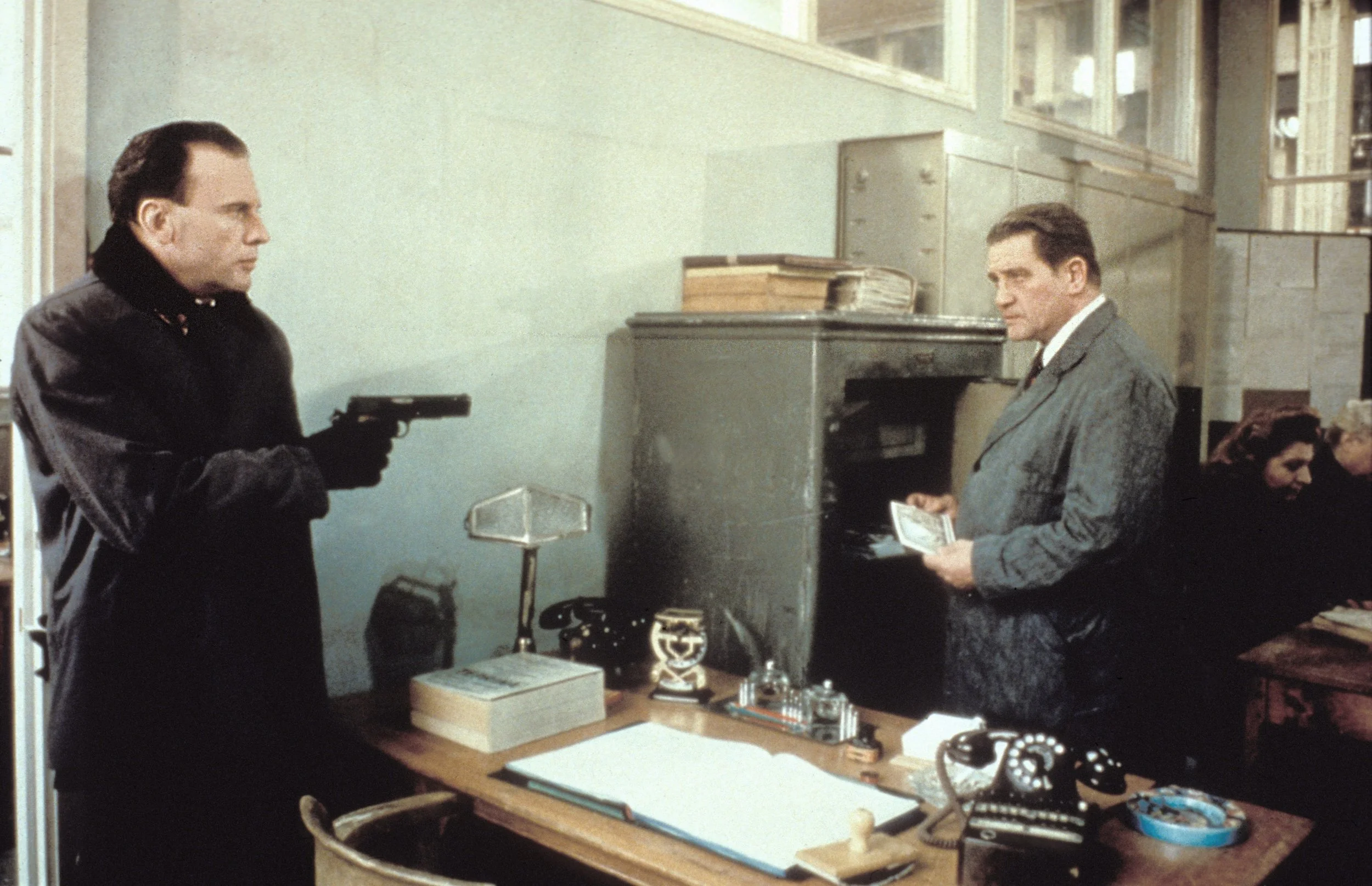
THE 4K EXPERIENCE
StudioCanal's new 4K restoration gives Flic Story a welcome visual refresh while preserving the character of its original film presentation.
The increased resolution brings greater clarity to faces, costumes, interiors and the film's Parisian locations. That additional detail is particularly valuable in a crime film built around observation. Small gestures, tired expressions and the texture of the environments all become more apparent.
The image retains a cinematic quality, with natural grain helping to preserve the sense that we are watching a film rather than an artificially polished digital recreation.
The restoration also benefits the film's darker scenes and interior locations. Shadows have greater definition, while the contrast between the city streets, police offices and more threatening criminal spaces feels more controlled.
The overall presentation suits the material beautifully.
Flic Story is not a film dependent on dazzling spectacle, but the restoration allows its atmosphere to come through with greater confidence. The Parisian locations feel more tangible, the performances gain additional presence and Bolling's score sits comfortably within a presentation that respects the film's period character.
This is exactly the kind of release that demonstrates the value of the Cult Classics range: a well-regarded but perhaps less internationally celebrated genre title receiving the care and attention required to be properly reassessed.
SPECIAL FEATURES: A CASE WORTH REOPENING
StudioCanal has assembled a strong collection of extras for this release, offering both historical context and useful insight into the film's production.
The new video essay, Flic Story: A Eurocrime Procedural by Will Webb, is particularly welcome. It provides an opportunity to place the film within the broader European crime tradition and explore the way French police thrillers intersect with the wider world of Eurocrime.
The archival extract from Allons au cinéma, featuring Jacques Deray interviewed by Jean-Louis Trintignant, is another valuable inclusion. It offers a direct connection to the production and allows Deray to discuss the film in conversation with one of its leading performers.
The audio commentary from filmmaker and historian Steve Mitchell and Mondo Digital's Nathaniel Thompson provides further genre context (some of which is used in the creation of this review), while the original trailer completes the package.
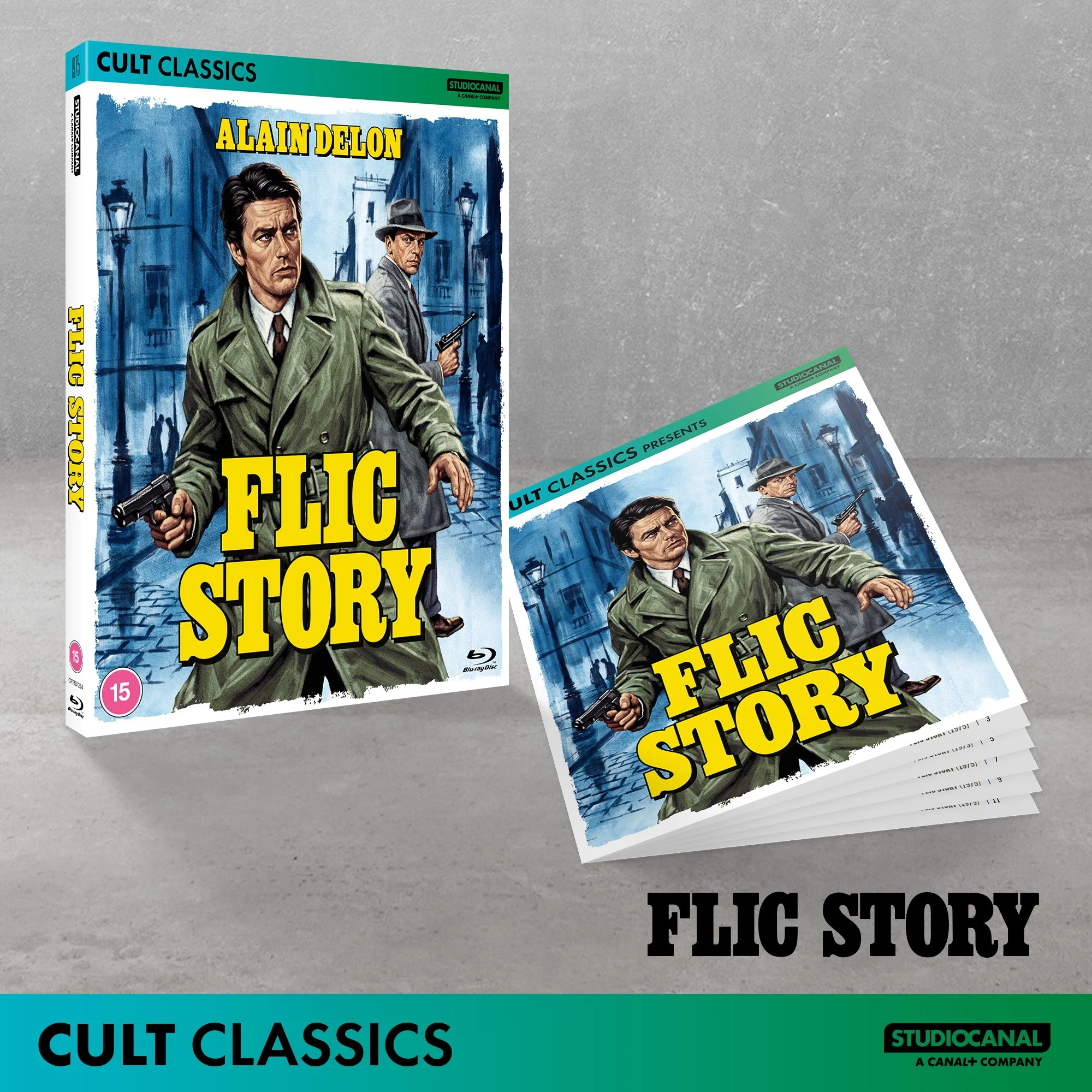
The 12-page booklet (I sadly didn’t get a productised copy of the release) is advertised to feature an essay by Peter Raleigh, adds another layer of appreciation and helps place Flic Story within the history of French crime cinema.
It is a thoughtful set of extras that recognises the film as more than simply an Alain Delon vehicle. There is a wider story here about European crime filmmaking, the police procedural and the enduring appeal of real-life criminal investigations.
FINAL THOUGHTS
Coming to Flic Story for the first time, I wasn't quite sure what to expect beyond the obvious combination of Alain Delon, Jean-Louis Trintignant and 1970s French crime cinema.
What I found was a remarkably assured police thriller that makes its procedural foundations one of its greatest strengths.
It has the star power of Delon, the formidable presence of Trintignant, the craftsmanship of Jacques Deray and the added fascination of being rooted in a real investigation. But what makes it work is the way those elements come together without ever feeling like a conventional star-driven thriller.
This is a film about patience, obsession and professional instinct.
It understands that the pursuit of a dangerous criminal is rarely glamorous, and that the line between cop and criminal can become increasingly complicated when both men are defined by their dedication to the job in front of them.
As an introduction to French crime cinema, Flic Story makes a particularly strong case for digging deeper into the genre. It sits somewhere between the cool professionalism of the great French gangster films and the more grounded procedural tradition, delivering something that feels distinctly French while remaining immediately accessible.
StudioCanal's new 4K restoration gives the film the presentation it deserves, while the extras provide useful context for anyone interested in French crime cinema, European genre filmmaking or the careers of Deray, Delon and Trintignant.
A compelling police thriller, a fascinating true-crime adaptation and, for me, a very welcome first introduction to a film that deserves to be considerably better known.
Score: 4/5
BLURAY INFORMATION FROM PR:
Flic Story
WORLDWIDE 4K DEBUT FOR ALAIN DELON CRIME THRILLER
A duel between a merciless killer and a French supercop… FLIC STORY - starring French superstar ALAIN DELON - is making its worldwide 4K debut on October 5 as part of STUDIOCANAL’s Cult Classics range, with a brand new UHD SDR restoration, superb extras, and a 12 page booklet, with new artwork by Thomas Hodge (aka The Dude Designs). The film is also released on Blu-ray and Digital.
Based on the bestselling true crime book written by top French cop Roger Borniche, detailing his cat and mouse hunt for a ruthless escaped killer, FLIC STORY, shot in and around Paris, is directed by the brilliant Jacques Deray (Le Marginal), and stars Delon (Red Sun) at his charismatic best as the dogged Borniche, and Jean-Louis Trintignant (The City of Lost Children) as his murderous, and extremely dangerous quarry. The film has a sterling supporting cast including Renato Salvatori (Armageddon), Maurice Barrier (Le Gitan), André Pousse (Un Flic), Marco Perrin (Army of Shadows),and Claudine Agur (Credo), and a fantastic score by Claude Bolling (The Awakening).
With outstanding performances from the leads, this is a superb example of French crime cinema, a hugely enjoyable, authentically gritty police procedural made all the more remarkable by the fact it is based on an incredible true investigation. A great companion piece to Delon’s 1972 police film Un Flic, this new 4K release is the definitive edition of FLIC STORY - case closed.
SYNOPSIS: Based on a true story, FLIC STORY follows Roger Borniche’s (Alain Delon) nine-year pursuit of Emile Buisson (Jean-Louis Trintignant), a seasoned killer who escapes from an asylum and begins a murderous rampage.
FLIC STORY is available to buy on 4K UHD, Blu-ray and Digital from 5th October 2026 and available to pre-order.
SPECIAL FEATURES:
NEW Flic Story: A Eurocrime Procedural - a video essay by Will Webb
FLIC STORY: Jacques Deray interviewed by Jean-Louis Trintignant: an extract from Allons au cinéma (1975) © INA - 1975
Audio Commentary with Filmmaker/Historian Steve Mitchell and Mondo Digital’s Nathaniel Thompson
Original Trailer
The 4K UHD and Blu-ray both include a 12 page booklet with a new essay from Peter Raleigh.
Certificate: 15
Running Time: 112mins approx.